


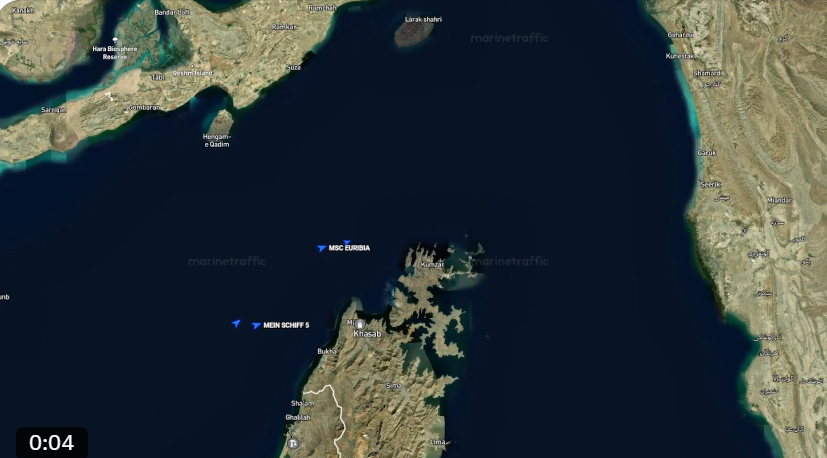
The unpredictable style of the US president muddies the diplomatic waters, but the closure of the Strait of Hormuz reminds Tehran of the strategic value of this waterway.
Donald Trump has sent envoys to Islamabad for new talks, even as Iran has just closed the Strait of Hormuz again. For Tehran, this move confirms that the strait remains an indispensable bargaining chip, and that Trump’s chaotic approach requires Iran to show calm and strategy.
Iran’s three prerequisites for resuming discussions were: a ceasefire in Lebanon, the lifting of the US blockade on Iranian ports, and the release of Iranian assets. After obtaining a two-week truce in Lebanon, Iran partially reopened the strait, hoping in return for the lifting of the blockade. But Trump maintained the blockade, falsely claiming that Iran had surrendered and agreed to hand over its enriched uranium.
Faced with this reversal, Tehran denied the claims and announced the full closure of the strait. Despite the chaos – including contradictory signals about the participation of Vice President JD Vance – Trump ultimately chose to try the diplomatic path again.
The core issue remains: Iran’s right to enrich uranium on its soil. One solution could be a framework agreement postponing these discussions, perhaps at a future Trump-Xi summit. In the meantime, Iran is adopting a policy of silence in the face of media agitation.
US-Israel war against Iran Iran Etats-Unis Israël