


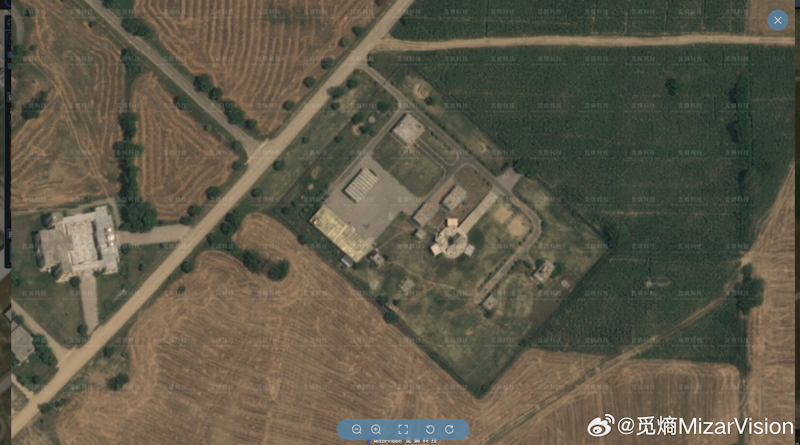
A United States military buildup in the Middle East is unfolding in plain sight — not through official statements, but through satellite imagery released by a Chinese commercial space firm.
This week, Hangzhou-based MizarVision published a series of high-resolution images tracking daily movements of American air and naval forces across the region. The imagery offers a rare, near real-time look at shifting force posture as tensions simmer around Iran.
F-22s Appear in Israel
Among the most striking revelations was the presence of 11 Lockheed Martin F-22 Raptor stealth fighters parked at Ovda Air Base in Israel.
The deployment marked the first confirmed appearance of F-22s on Israeli soil — a notable shift from their more familiar regional staging points in the UAE and Saudi Arabia. The imagery quickly generated headlines across the region, underscoring both the surprise factor and the growing transparency enabled by commercial satellites.
Carrier Movements in the Mediterranean
Satellite photos also showed the USS Gerald R. Ford departing Souda Bay Naval Base in Greece — another visible sign of repositioning naval assets as Washington adjusts its regional footprint.
Surge in Saudi Arabia
On Feb. 25, MizarVision released imagery of a significant concentration of U.S. aircraft at Prince Sultan Air Base in Saudi Arabia.
The images reportedly showed:
- 15 Boeing KC-135 Stratotanker refuelers
- 6 Boeing KC-46 Pegasus tankers
- 1 Boeing C-17 Globemaster III
- 6 Boeing E-3 Sentry aircraft
- 2 Northrop Grumman E-11 BACN jets
The mix suggests a heavy emphasis on refueling, command-and-control, and long-range mobility — the backbone of sustained air operations.
Drawdown in Qatar
At the same time, imagery showed a relative reduction of U.S. aircraft at Al Udeid Air Base in Qatar.
Only one KC-135, two Lockheed Martin C-130 Hercules transports, and seven helicopters were visible on the ramp. The apparent drawdown is notable given Qatar’s geographic proximity to Iran compared to Saudi Arabia.
A Notable Omission
Despite releasing imagery from multiple locations — including the UK-controlled island of Diego Garcia — MizarVision did not publish any images of Al Dhafra Air Base in the United Arab Emirates.
Al Dhafra traditionally hosts significant numbers of U.S. fighter aircraft in the region. Its absence from the image set has raised quiet questions, particularly given the UAE’s defense ties with China. The Emirati military has acquired a squadron of AVIC Hongdu L-15 trainers, produced by China’s aviation industry.
The New Transparency of Modern Conflict
Commercial satellite companies in the U.S. and Europe routinely release imagery revealing battlefield developments — from Ukrainian strikes on Russian airfields to Israeli attacks inside Iran. What makes this case different is that a Chinese firm is spotlighting American military movements, effectively flipping the script.
The episode highlights a broader reality of modern geopolitics: in an era of ubiquitous commercial space surveillance, major force deployments are increasingly difficult to conceal. Strategic messaging is no longer controlled solely by governments — it is shaped in orbit, frame by frame, by private companies operating thousands of miles above the Earth.
As tensions with Iran evolve, the world may be watching not through official briefings, but through the lenses of commercial satellites.
#Iran #UnitedStates #Israel #strikes #war #MiddleEast